
Choose a Carney Search Trail
The best Carney people search route depends on whether the starting fact is a name, an address, a business, or a family event. Names work well in Maryland Judiciary Case Search, MDLandRec, Business Express, and the state license queries. Addresses work differently. Maryland's property database does not accept an owner name, but it does accept a Baltimore County street, account identifier, or map reference. That parcel result can expose a mailing address and deed references. Older family searches gain more from probate files, newspapers, census schedules, and transferred records at the Maryland State Archives.
Carney has no municipal clerk or local records portal of its own. The Census-designated place is governed by Baltimore County, while courts, vital certificates, licenses, corporations, and voter services use Maryland systems. Confirm the county before accepting a result labeled Baltimore. Independent Baltimore City keeps separate deeds, courts, tax accounts, elections records, and library collections.
- Write down the exact name, date range, street, ZIP code, or known associate. Keep spelling variants and former surnames nearby.
- Use the official index suited to that fact. Try Case Search for a party name, SDAT for an address, or Business Express for an entity.
- Read the result as a lead, not proof. Capture case numbers, account identifiers, filing dates, liber and folio references, or license numbers.
- Open the source record or ask its custodian for a copy. A docket summary and an index entry may omit the document that resolves identity.
- Cross-check a second record type before concluding that two similar names refer to the same Carney person.
Note: Postal names help deliver mail, but they do not decide whether Baltimore County or Baltimore City holds a record.
Carney Records Start in Towson
Baltimore County and Maryland divide the work that one city hall might handle elsewhere. The Clerk of the Circuit Court records deeds and marriage licenses, maintains Circuit Court files, and supports related license records. The Register of Wills keeps estate proceedings. State Department of Assessments and Taxation offices maintain property assessment data, while county finance offices handle tax bills. The Carney public records page gives the access rules and request paths; these offices are the main points of orientation.
Register of Wills
401 Bosley Avenue, Suite 500
Towson, MD 21204
410-887-6680
Resolve Carney's Place Names
Carney is a community identity, a Census geography, and an unevenly used mailing label. Addresses commonly use ZIP codes 21234 and 21236, and a database may display Parkville or Nottingham instead. Older sources can use Cub Hill, Harford Road, Old Harford Road, a subdivision, or an election district. A blank result under “Carney” is therefore a reason to vary the place term, not proof that the person was absent.
Use the Baltimore County My Neighborhood map and SDAT's county field to settle jurisdiction. The crossing of Harford Road and Joppa Road is a strong geographic anchor. Planning records also use the wider Carney-Cub Hill-Parkville area, which can supply old school, road, tract, and neighborhood names for archive searches.
Search Carney Deeds by Name
MDLandRec is the main name-based route into Baltimore County deeds, mortgages, releases, and other recorded instruments. Registration is free. Search indexed parties, then use a result's liber and folio, instrument number, date, and document type to follow the chain. A grantor transfers an interest; a grantee receives it. One deed may identify spouses, trustees, lenders, prior owners, or an estate.
The portal blends scanned historic books with modern instruments, so coverage and image access vary by series. Baltimore County land series reach back to the colonial period, but some older indexes or images require the Maryland State Archives series catalog, an Archives search-room terminal, or a clerk copy request. Search names without punctuation and try initials or married-name variants.
The official MDLandRec entry shows where a free account opens Maryland land indexes and images.
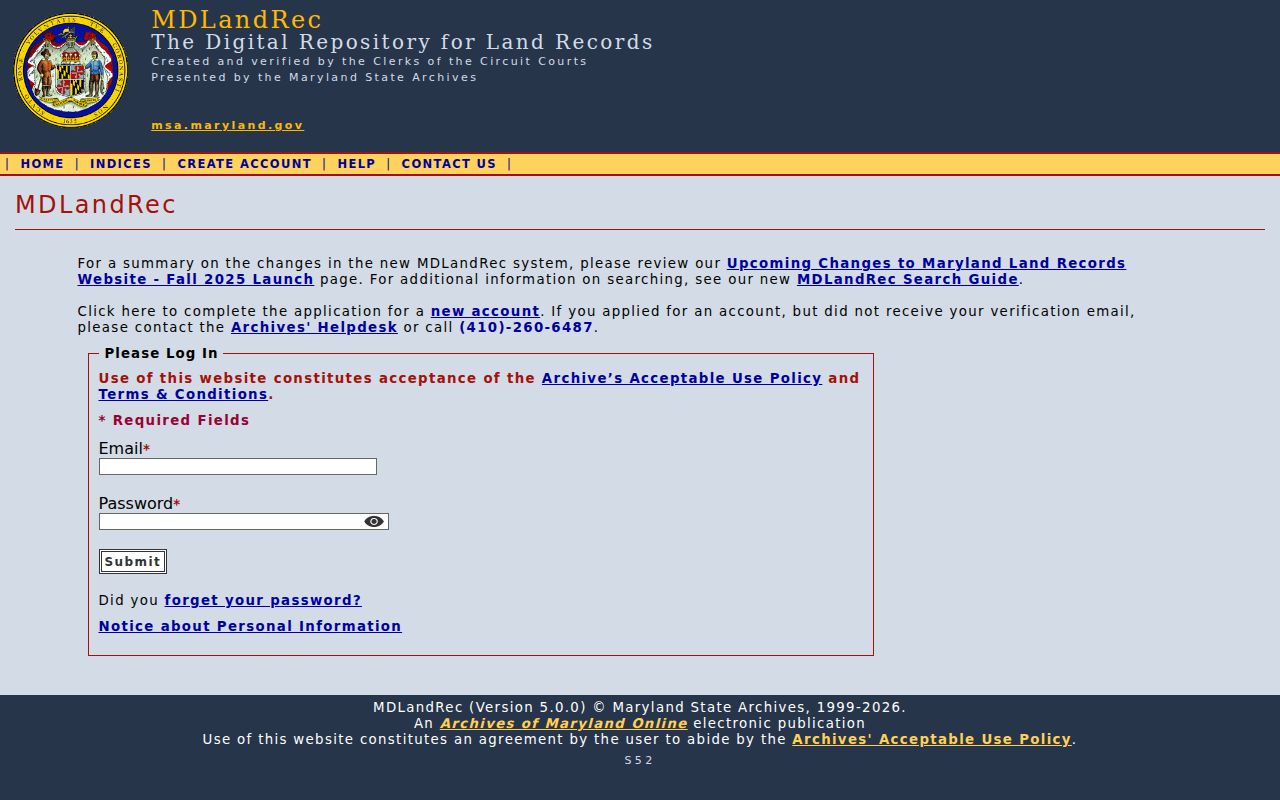
The sign-in step is part of access, not a sign that the land records are a paid commercial search.
Check Carney Court Names
The Maryland Judiciary Case Search and Record Portal searches public summary data by party name across District and Circuit courts. Carney matters may appear in the District Court of Maryland for Baltimore County or the Circuit Court for Baltimore County. Results can show a case number, party role, filing date, court, charge or claim text, events, and disposition. Civil District Court coverage begins in 1991 statewide; Baltimore County Circuit civil coverage begins June 1, 1995, and Circuit criminal coverage begins in June 1984.
A search result is not the complete court file. Sealed material, juvenile records, some warrants, adoption records, and other protected information do not appear. Maryland also shields some records under specific laws. Ask the clerk for the public file when a summary is unclear, or visit a courthouse terminal. The March 2026 integrated portal kept the public access level but changed the interface, so older saved instructions may no longer match the screen.
| Court | Covers | Name Search | Access |
|---|---|---|---|
| Baltimore County Circuit Court | Major civil, criminal, family | Maryland Case Search | Free summary; file at clerk |
| District Court for Baltimore County | District civil, traffic, criminal | Maryland Case Search | Free summary; file at clerk |
| U.S. District Court, District of Maryland | Federal cases | PACER | Account; usage fees may apply |
Note: No online match can prove that no case exists because date limits, spelling, shielding, and access rules affect results.
Order Carney Vital Records
Baltimore County does not issue local vital certificates. A person seeking a Carney birth, death, marriage, or divorce product uses the Maryland Vital Statistics Administration. The Circuit Court clerk is another route for marriage records tied to county-issued licenses and for divorce case files. Orders may be available by mail, in person, or through the state's authorized online process, depending on record type.
These records are not ordinary Maryland Public Information Act files. Health-General §§4-217 and 4-220 limit certified birth and death access to eligible people and representatives. Historical transfers follow different schedules. State Government §9-1015 generally permits transfer after 100 years for births and 20 years for deaths, marriages, and divorces, but the Archives genealogy indexes must be checked for actual series coverage.
Turn a Carney Address Around
Maryland SDAT's Real Property Data Search works from jurisdiction and address, street, account number, or map reference. It expressly lacks an owner-name search. Choose Baltimore County, try the street without extra punctuation, and open the account record. The result can show the premises address, current owner, mailing address, legal description, transfer details, assessment values, and deed references.
From there, carry the liber and folio into MDLandRec. The deed can name prior owners and provide the next book and page in the chain. Use My Neighborhood for parcel context, permits, zoning, and nearby features. A mailing address is where notices go; it is not always where the owner lives.
Carney address → Baltimore County GIS → SDAT account → deed reference → MDLandRec party chain.
- Parcel
- A mapped unit of land tied to an assessment account.
- Situs address
- The physical location of the property.
- Mailing address
- The destination for owner notices, which may be elsewhere.
- Liber and folio
- The deed book and page reference used to retrieve an instrument.
Trace Carney Estates and Heirs
An estate trail can connect a deceased Carney resident with heirs, a fiduciary, property, and later transfers. Maryland Judiciary's Estate Search supplies docket-level access, while the Baltimore County Register of Wills holds wills, administrations, inventories, and related estate papers. Current documents may require a copy request or counter visit. Older electronic estate indexes reach well into Maryland history, with some Baltimore County materials transferred to the State Archives.
Start with the decedent's full name and likely death period. Record the estate number and representative, then compare the will or administration file with obituaries and deeds. A deed from an estate may identify heirs or trustees, while an obituary can supply married surnames and family links that explain unfamiliar names in the probate file. Do not assume every named beneficiary was still living at the last Carney address.
Verify Carney Business Connections
Maryland Business Express accepts a business name or Department ID. Results identify the legal entity, status, principal office, resident agent, formation details, and a filing history. Most filings made after August 2001 can be viewed without charge, according to SDAT. Those images may reveal organizers, authorized persons, signers, former agents, and earlier addresses.
Roles change, so use the filing timeline. A resident agent receives legal service and is not necessarily an owner. Trade names and UCC records add separate state trails; Baltimore County permits can connect a premises to an applicant or contractor. The official Business Express screen shows its two principal search modes.
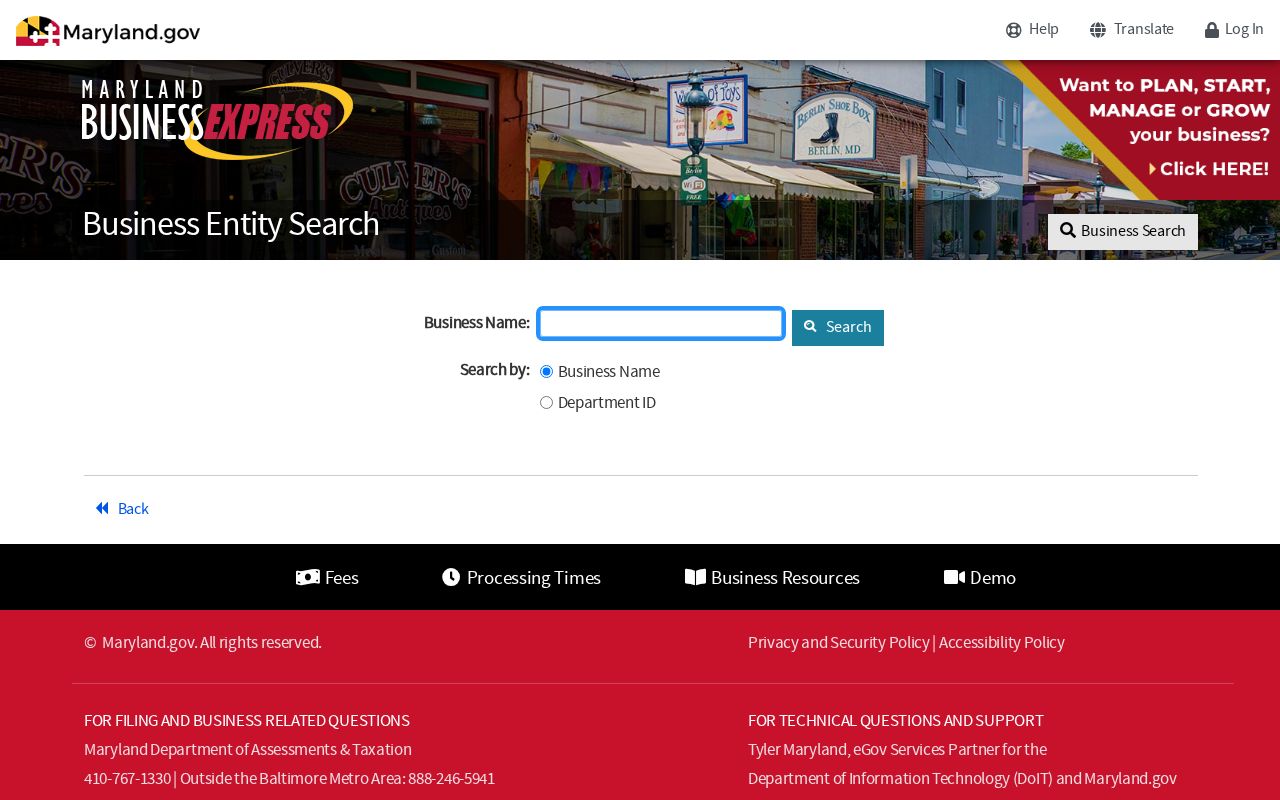
The Department ID is the cleanest way to return to the same entity when similar business names appear.
Check Carney Professional Licenses
The Maryland Department of Labor Licensing Queries offers a universal last-name search and profession-specific paths. Other occupations use their own boards, including physicians, nurses, counselors, social workers, attorneys, and educators. A public result may show a full name, credential type, number, status, original date, expiration, business address, or public discipline, depending on the board.
Search by profession first when a common surname produces too many people. Then compare the license number and public business details with a permit, entity filing, or known address. A credential proves the role and status shown by that board, not every claimed affiliation. The official Labor page displays the statewide surname and occupation choices.
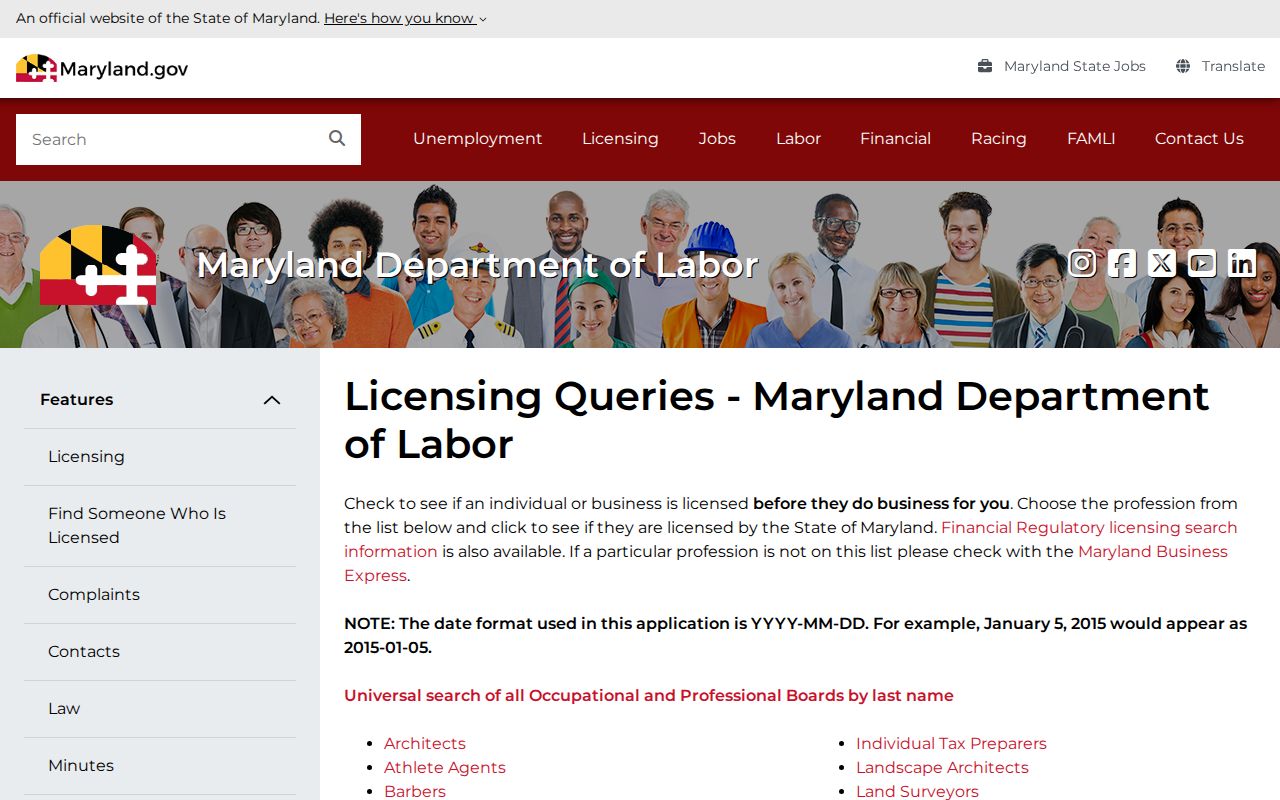
Board-specific verification remains the best source when the universal query sends the user to a separate licensing system.
Use Carney Voter Records Carefully
Maryland's Voter Lookup is an identity-gated service, not a public phone book. It asks for name, birth date, ZIP code, street number, and sometimes a middle initial to let a voter confirm registration and polling information. Public voter lists follow a different route. Election Law §3-506 and COMAR 33.03.02 restrict access to qualified Maryland registered voters who certify an electoral purpose.
The Baltimore County Board of Elections offers local help and inspection routes, while the State Board of Elections handles standard data products. Protected addresses and confidential identifiers are withheld. Current lookup steps, list fees, historical poll books, confidentiality, and list-maintenance rules are covered on the Carney voter registration records page.
Search Carney Custody Records
Baltimore County does not publish a clearly identified open county jail roster. Start with the offline custody route or Maryland VINE for status notifications. The Maryland incarcerated individual locator covers state custody, and the federal Bureau of Prisons locator covers federal custody. Each has a different scope, so a missing name does not establish that no arrest or detention occurred.
The Maryland Sex Offender Registry is a distinct public-safety record. Search fields and notice options should be read with the registry's accuracy and anti-harassment warnings. Its official entry page makes those limits visible before a Carney address search.
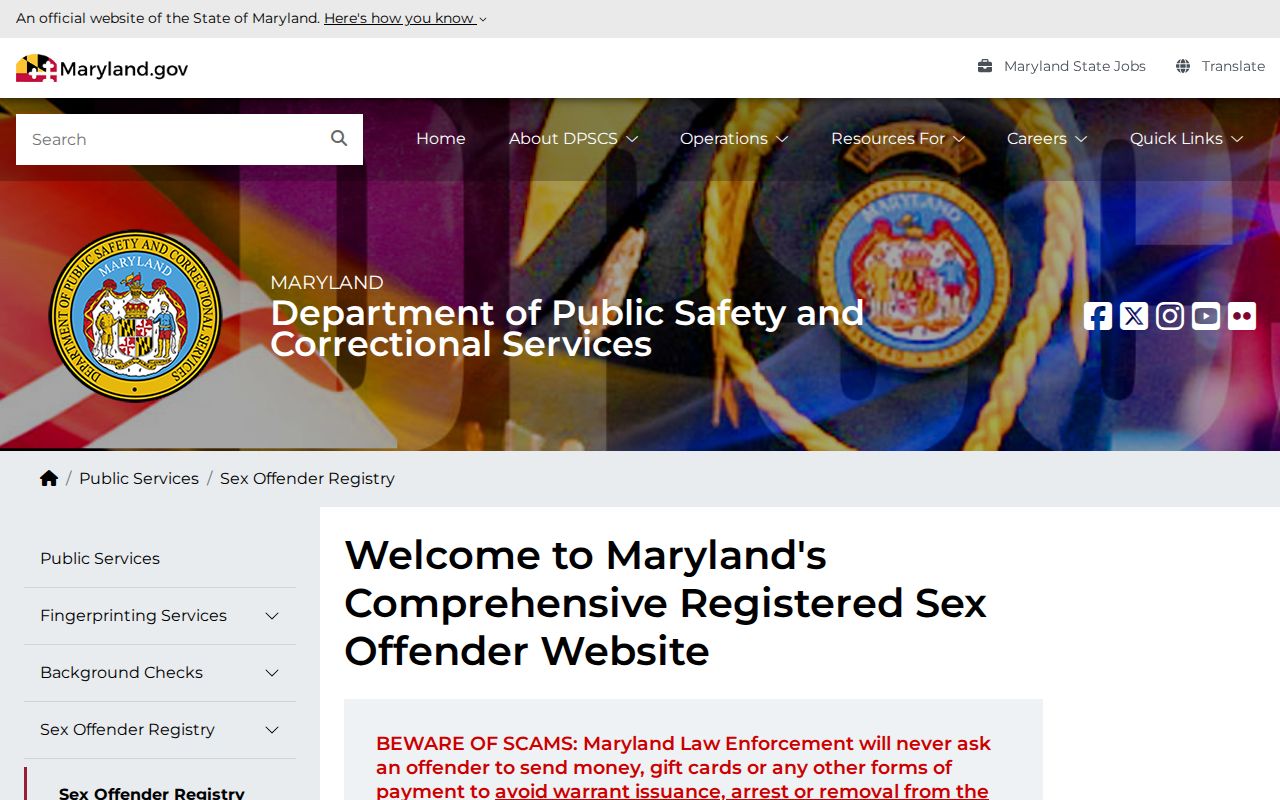
Registry data must not be used to injure, threaten, or harass a registrant or anyone at a listed address.
Rebuild Historic Carney Addresses
Carney's records predate the community name. Baltimore County dates to 1659, Baltimore City separated in 1851, and county planning material places Carney's crossroads origin in 1885. Early residents are more likely to appear under a road, tract, landowner, election district, or nearby postal designation than a modern CDP filter. Harford Turnpike, Harford Road, Old Harford Road, Joppa Road, Cub Hill, and Parkville are useful variants.
The Parkville-Carney Branch Library supplies local help and access to genealogy and newspaper databases. The Maryland Center for History and Culture holds regional directories, maps, photographs, and manuscripts. State Archives series catalogs lead to land, probate, marriage, tax, court, and election volumes. Historical Society of Baltimore County files add neighborhood, cemetery, map, and family context.
| Period marker | Why it changes a Carney search |
|---|---|
| 1659 | Baltimore County land and court series begin long before Carney became a place label. |
| 1851 | Baltimore City separated, creating parallel city and county record systems. |
| 1885 | County planning research dates the Carney community origin to the Harford and Joppa corridor. |
| 1950 Census | The newest publicly released federal population schedule can place households and neighbors. |
Request Missing Carney Records
When an agency record is not online, send a focused request to the office that created or keeps it. The Maryland Public Information Act, General Provisions Title 4, is the broad access law. An agency should grant or deny a request promptly and no later than 30 days. If it needs more than 10 working days, it must explain why and estimate completion. The first two hours of search and preparation cannot be charged under §4-206.
Name the record, office, person or property, date range, and any known case, permit, parcel, or instrument number. Ask for electronic copies when practical. Court records follow the Maryland Rules on Access to Court Records, while vital and voter records retain their own eligibility limits. If the wrong office receives the request, ask which custodian holds the series instead of sending the same broad request everywhere.
Official sources usually provide stronger context than commercial people-finder profiles. An official index may still be incomplete, but it identifies the custodian and the record's scope. Commercial compilations can merge people, retain old addresses, and hide source dates behind a fee. Confirm a material fact at the originating office.
Note: An index points to a record; a certified copy is the custodian's formal reproduction of that record.